
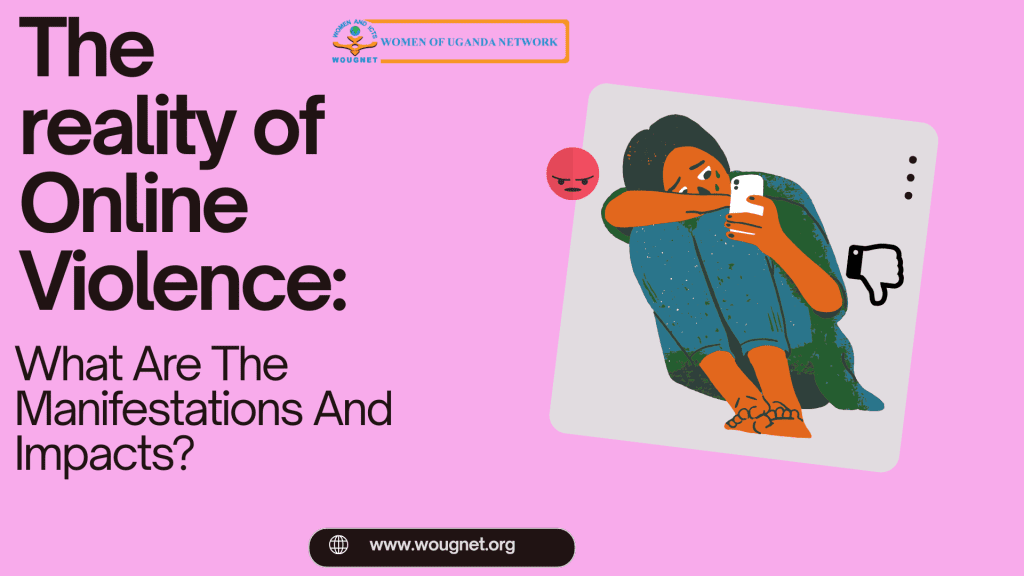
1 in 3 women globally experience violence as they participate in online communities. often face cyberbullying, hate speech, stalking, doxing, non-consensual sharing of images, and trolling. These online attacks spill into real-life, affecting their physical safety and leaving victims feeling fearful, anxious, and isolated. The impact on mental health is severe, with trauma, depression, and stress from online abuse taking a heavy toll.
For instance, a woman in the US faced death threats and stalking after her address was shared on Twitter to “pay her a visit”. Our digital footprint can also be haunting – old tweets or posts might cost job opportunities, and online rumors can wreck personal relationships
The effects can be severe and far-reaching
- The harm caused by online violence has eroded the women and girls self-esteem. In a campaign by WOUGNET, respondents shared their experiences and put out a call for action to be taken against the online abuse of women and girls and ensuring gender digital security that includes training women and girls to protect themselves when using the Internet to access information. Among the challenges faced was name-calling because of the posts made which tend to paint a false picture about the victim.
- One of the respondents also said that the violence greatly affects young girls and women with disabilities in that they sometimes lose their self esteem and this limits them to meet their goals.
- In addition, victims face physical attacks and assault from perpetrators Example: A woman was attacked and stabbed after her address was shared online by an ex-partner.
- Some victims withdraw from social interactions, both online and offline due to fear or shame. They tend to avoid public places, events, or social media conversations to escape harassment.This isolation can exacerbate mental health issues.
- Economic Impacts- Online reputation damage can lead to job loss, reduced income, or financial instability.Victims might lose business opportunities or struggle to find employment due to online content.
- Victims may struggle to trust others or feel safe online and offline.They might become paranoid about their online presence or fear real-life encounters.This mistrust relationships and impact daily life.
What Should Be Done?
- Police and prosecutors who handle online gender based violence need to be trained and sensitized on cyber laws and how to handle victims and survivors of online gender based violence. This will bridge the gap between policy makers,enforcers and victims.
- There is a need to have policy reforms, particularly seeking to address and criminalise all forms of online gender-based violence. The parliament should enact laws with heavy punishments for perpetrators of online abuse to limit further abuse by the media and the public at large.
- Document everything.Save evidence of online harassment. Report incidents. Use platform tools like ‘Report, Block” or contact authorities if threats are credible. Seek support.Talk to friends, family, or professionals about online abuse. Practice online safety by using strong passwords, limit personal info sharing.
- Social media platforms should improve reporting tools. Make it easy for users to report abuse, enforce policies,take action against harassers and support victims.
- For communities:-Support victims,offer help to those experiencing online abuse. Encourage real-life interactions to counterbalance online impacts.
- For Civil Society Organisations.Take threats seriously: work with authorities to investigate credible online threats.Collaborate with platforms: Work with tech companies to address online abuse.Provide resources: Offer support and resources for victims of online violence.
Conclusion
Online violence is a ticking time bomb, with devastating consequences that spill into real life. It’s not just a virtual issue, but a gateway to real-life trauma, affecting mental health, relationships, and physical safety. We must take action. Document evidence, report incidents, and seek support. Platforms, communities, and authorities must work together to address online abuse, promote digital literacy, and provide resources for victims. Let’s break the silence and create a safer online space.
To report Online Gender-Based Violence, use our anonymous reporting portal on https://ogbv.wougnet.org/ for legal, psychosocial and technical support for free.
Compiled by:
Babirye Roseline
Program Assistant, Gender and ICT Policy Advocacy
